
What the Factories Divide
Fender's Player Series basses are built in Ensenada, Mexico, at the facility Fender has operated there since the mid-1980s. The Vintera Series — a line organised around decade-specific specifications — comes from the same plant. The American Professional II sits north of the border, finished in Corona, California. The Custom Shop, also in California, occupies a separate building and a separate logic entirely. Same corporate parent, same headstock silhouette, prices that span roughly an eight-to-one ratio from the entry point of the Mexican lines to a Custom Shop Precision with a hand-aged finish.
The Player Precision and Jazz basses use Player Series pickups wound to Fender's own specs — Alnico 5 designs that replaced the earlier Standard Series units when the Player line launched in 2018. The tuners are cast, the bridge is a bent-steel four-saddle unit on the Jazz and a comparable stamped unit on the Precision, and the neck is finished in a polyurethane coat that is durable under hard use. These are not compromises disguised as features; they are honest production choices that let a factory working at volume hold tolerances. The fretwork on a current Player Series instrument is, by the evidence of the specifications Fender publishes, rolled and levelled before it leaves Ensenada. Players handling examples from the last few years generally find the nut slots cut to a usable depth.
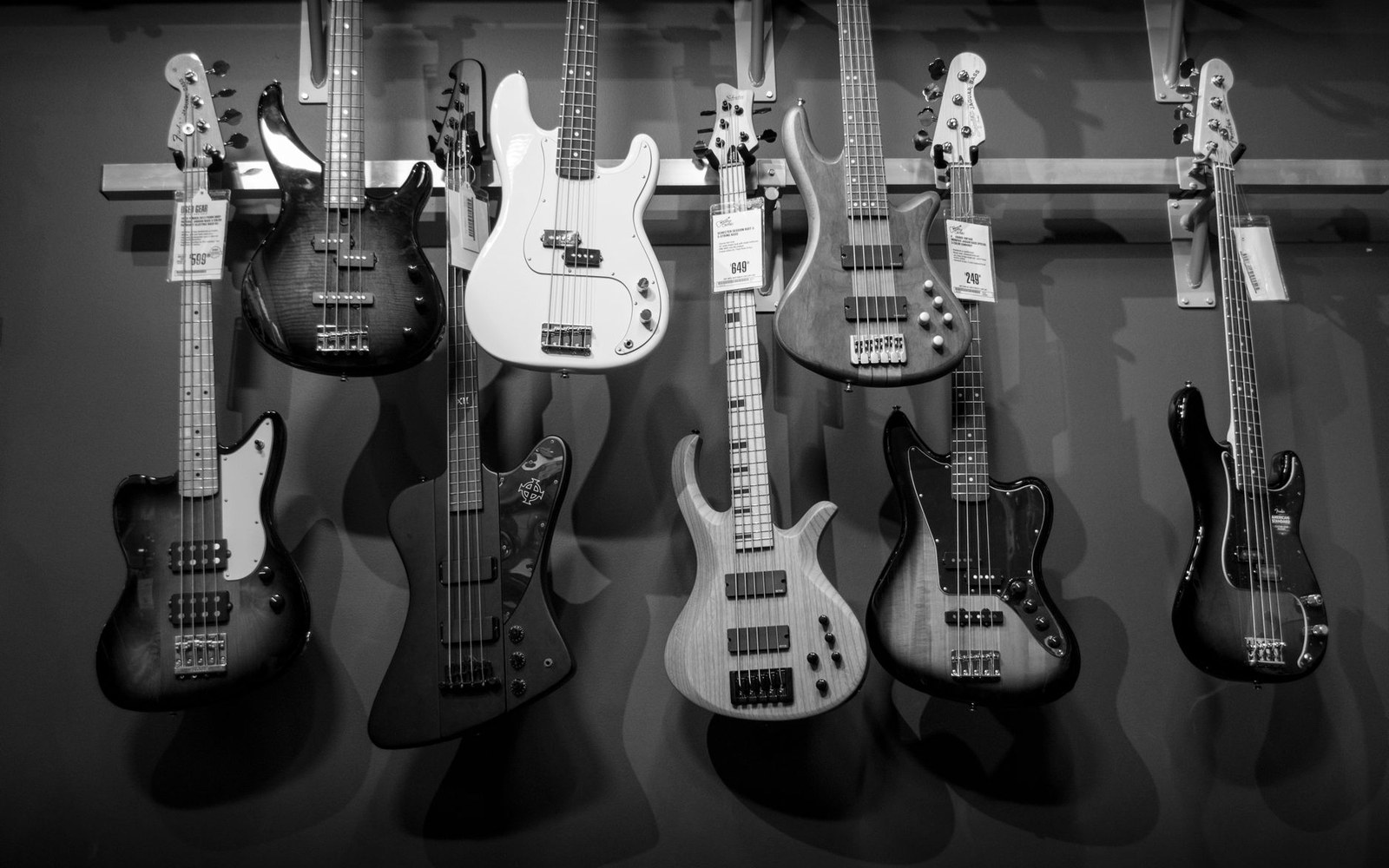
The shop wall used to set the price. Most of that work has moved to second-hand listings and their completed-sale data.
Photo: Stephen Niemeier / Pexels
The Vintera line adds decade-specific pickup voicings and period hardware finishes — the Vintera '60s Precision runs a split-coil wound to approximate the output and resonant character of mid-1960s units, and the necks carry C-profile dimensions closer to what was standard before the late-1960s narrowing. The design argument here is audible: the Vintera pickups sit at a noticeably different frequency balance than the Player Series equivalents, warmer through the midrange and less present above two kilohertz. That is a real sonic difference grounded in real specification differences, not marketing positioning.
What the American Professional II Actually Changes
The American Professional II, launched in 2020, moves several things simultaneously. The pickups are V-Mod II units — narrow-aperture, alnico-magnet designs engineered around string-sensing area — and the difference in the low midrange is measurable on a frequency analyser and audible without one. The bridge on the American Professional Precision is a heavier bent-steel unit with brass saddles, giving the instrument more mass at a contact point where mass has consequences for sustain and string-to-string transfer. The neck heel is contoured on the Player and American Professional alike, but the American Professional II adds a rolled fingerboard edge — a tactile difference that session players consistently notice after an hour of playing.
The truss rod wheel on the American Professional II sits at the body end rather than requiring a tool at the headstock, a maintenance convenience that costs nothing in tone but matters to anyone who adjusts necks on a working schedule. The nut is bone on the American Professional II; the Player Series uses a synthetic nut. Bone rings differently under an open string, and it seats differently under string tension. That is a real specification gap.
Where the Custom Shop Argument Lives
The Fender Custom Shop operates on a different premise. A Master Built instrument is made by one named luthier from raw wood through final setup. The relic'ing process on a Closet Classic or Heavy Relic finish is applied by hand, not templated. The neck carve can be specified to a customer's exact feel. What you are paying for above the American Professional level is labour time, individual attention and the transferable fact of documented provenance — which, as the used market has confirmed, holds its value differently than a production instrument does.
None of this makes the Player Series a compromise and the Custom Shop a correction. It makes them honest answers to different questions about what a bass should cost and who should build it.