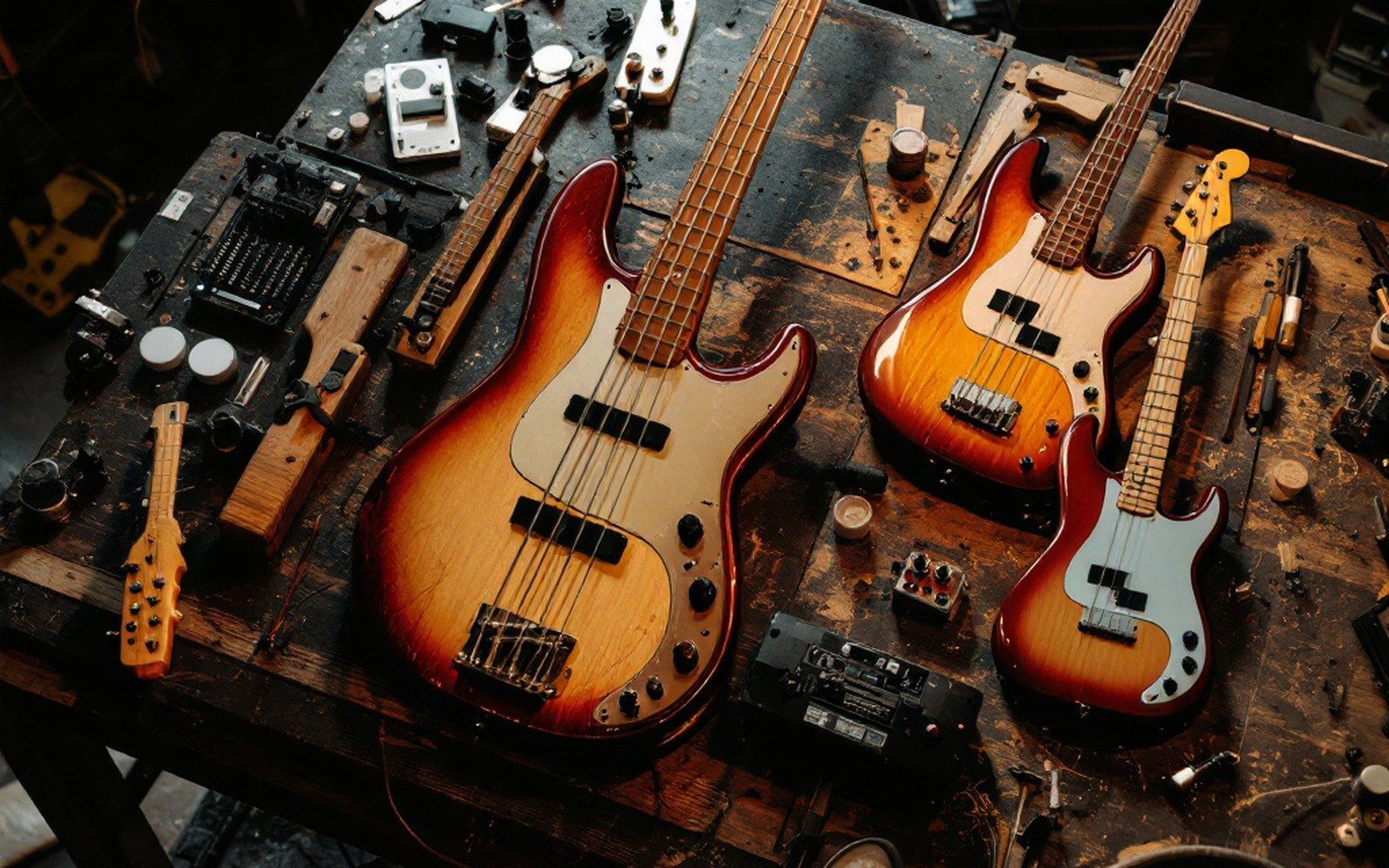
What the Data Actually Shows
Retail price lists tell you what a seller hopes to receive. Sold listings tell you what a buyer agreed to pay. For bass guitars, that distinction now matters enormously, and Reverb.com — with its publicly visible sold-price history across hundreds of thousands of transactions — has become the closest thing the market has to a real index. As of early 2025, the patterns it reveals cut against several assumptions that the catalogue price suggests.
Fender's entry-level and mid-tier lines depreciate quickly. A Player Series Precision Bass, retailing around $900 new, regularly sells used in the $450–$600 range within its first two years on the market — a depreciation curve closer to consumer electronics than to the vintage-instrument logic that Fender's marketing often implies. The Vintera series, positioned as a heritage alternative, holds slightly better, but not dramatically so. The American Professional II, retailing above $1,500, lands used in the $900–$1,100 band with some consistency. None of these figures are secrets; they are visible to anyone prepared to filter Reverb's sold tab by model and scroll.
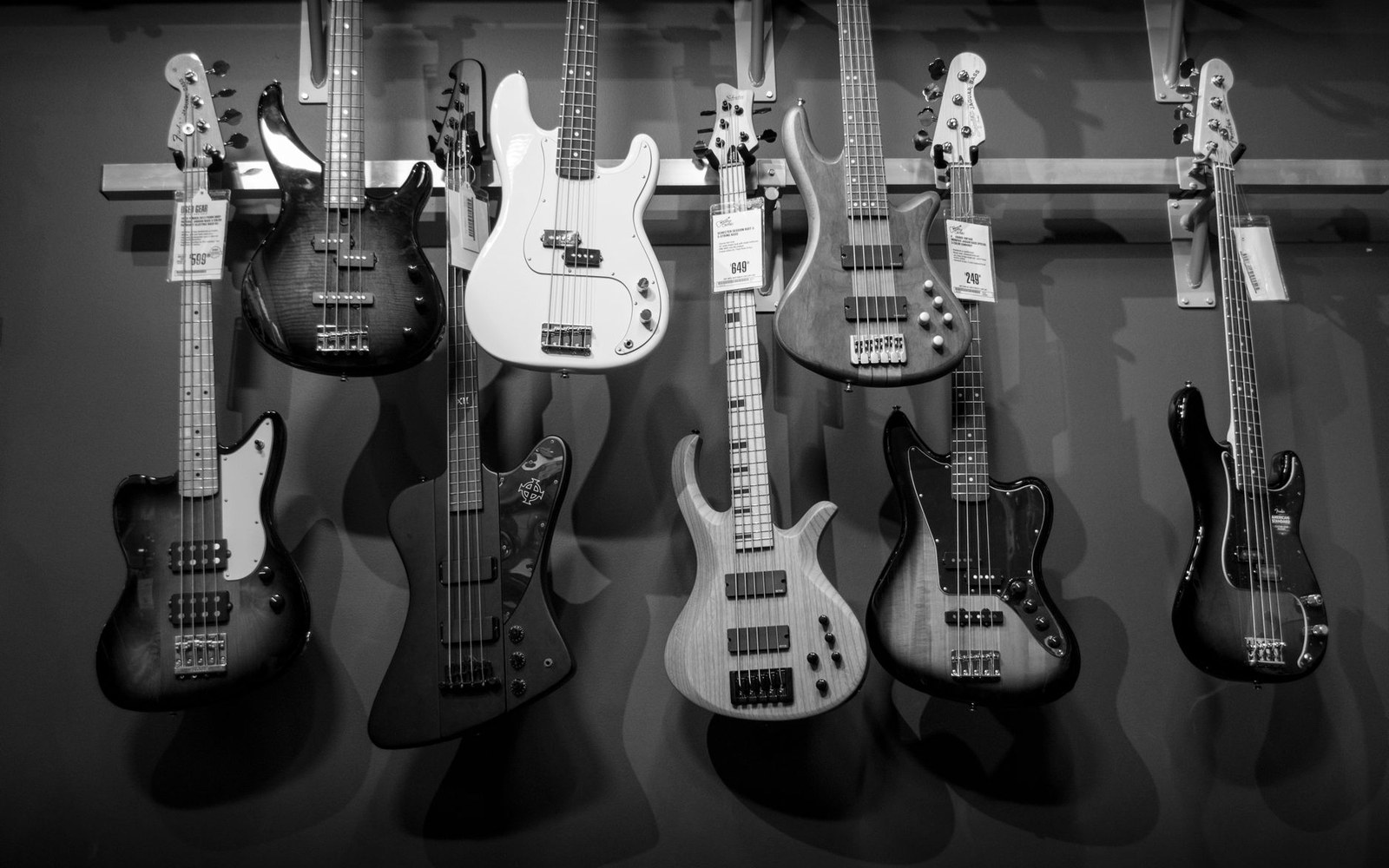
The shop wall used to set the price. Most of that work has moved to second-hand listings and their completed-sale data.
Photo: Stephen Niemeier / Pexels
The Japanese instruments complicate that picture in interesting ways. MIJ Fenders from the 1980s — produced during the period when Fender's California manufacturing was in transition — hold value stubbornly and in some cases appreciate. A clean 1984–1987 Fender Japan Jazz Bass that originally sold for less than $300 new now trades between $700 and $1,200 depending on condition and colour, because the consensus that those instruments were well-made has solidified into market behaviour. Ibanez's 1970s copies, once dismissed as knock-offs, follow a similar arc: the lawsuit-era instruments from Nagano, Japan have acquired genuine collector standing, and sold prices on Reverb confirm it.
Where Premium Builders Sit
The secondary market for boutique instruments is where Reverb's data becomes most revealing, because there is no MSRP anchor to distort the picture. A Sadowsky NYC bass — built in New York under Roger Sadowsky's direct oversight — retails new for several thousand dollars depending on specification. Used examples with light play consistently clear $2,000 and frequently reach $2,500 or above, a retention rate that few production instruments approach. Fodera instruments, which leave their Brooklyn workshop at prices starting above $5,000, rarely depreciate in any meaningful sense on the secondary market; supply is simply too constrained.
Dingwall's fanned-fret basses occupy an interesting middle tier. The Combustion and NG-2 models, produced offshore to a Dingwall specification, sell used at roughly 65–75 percent of retail — strong for production instruments. The Canadian-built Custom Shop pieces behave more like Sadowsky: demand from players who understand the fanned-fret geometry keeps prices firm.
What Moves the Numbers
Three variables reliably shift a used bass's Reverb price: original finish colour, neck profile documentation, and case or original paperwork. Surf Green and Fiesta Red command premiums on vintage Fenders that can run 20–40 percent above equivalent sunburst examples. A Jazz Bass with documented narrow-nut measurements sells faster than one described only by year. And original cases — particularly the brown tolex cases associated with early 1960s Fenders — are themselves traded as objects with independent value.
The larger point is structural. Before platforms like Reverb aggregated sold data at scale, price discovery for used instruments happened dealer by dealer, each with an incentive to set its own floor. That opacity benefited sellers. Transparent sold-history democratises the information, compresses margins, and makes it harder to pass a depreciated production instrument off as a value-holding collectible. The data does not lie about which instruments the market has decided to respect.