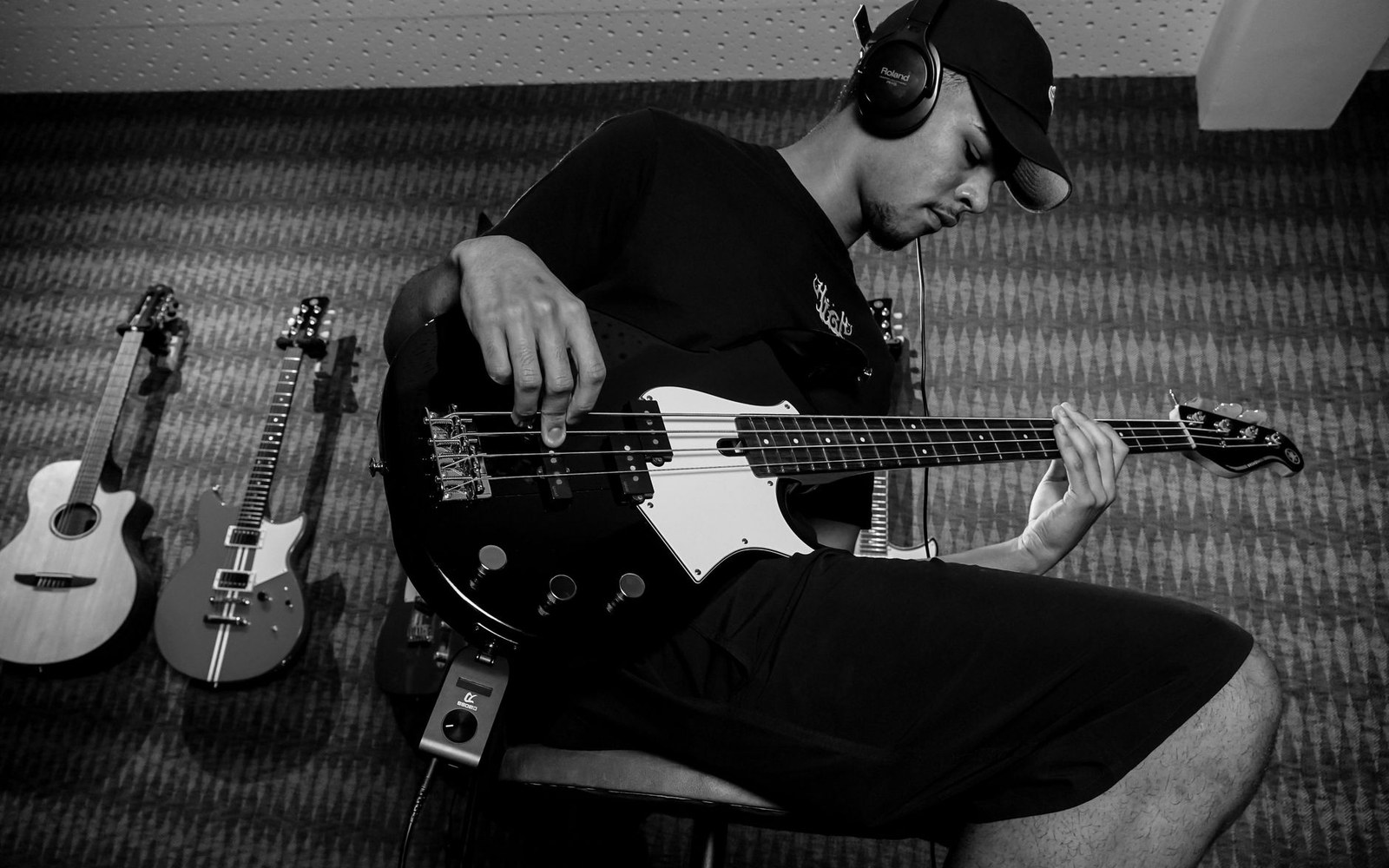
From Fender Six to Precision
Carol Kaye had spent most of the late 1950s and early 1960s as a jazz guitarist working the Los Angeles club circuit and session scene. In 1963, at a recording date at Capitol Studios, one of the scheduled bass players failed to show. Kaye picked up a Fender Precision and played the part. The sound was right, the producer kept rolling, and she never went back full-time to guitar.
She came to electric bass already fluent in jazz harmony and accustomed to the specific discipline of the studio clock — skills the Wrecking Crew demanded as standard. This loose collective of Los Angeles session professionals had no formal roster, but its core players — Hal Blaine on drums, Larry Knechtel on keys, Tommy Tedesco on guitar, and Kaye on bass — appeared on so many recordings through the mid-1960s to mid-1970s that the credits, where they existed at all, barely captured the scope.
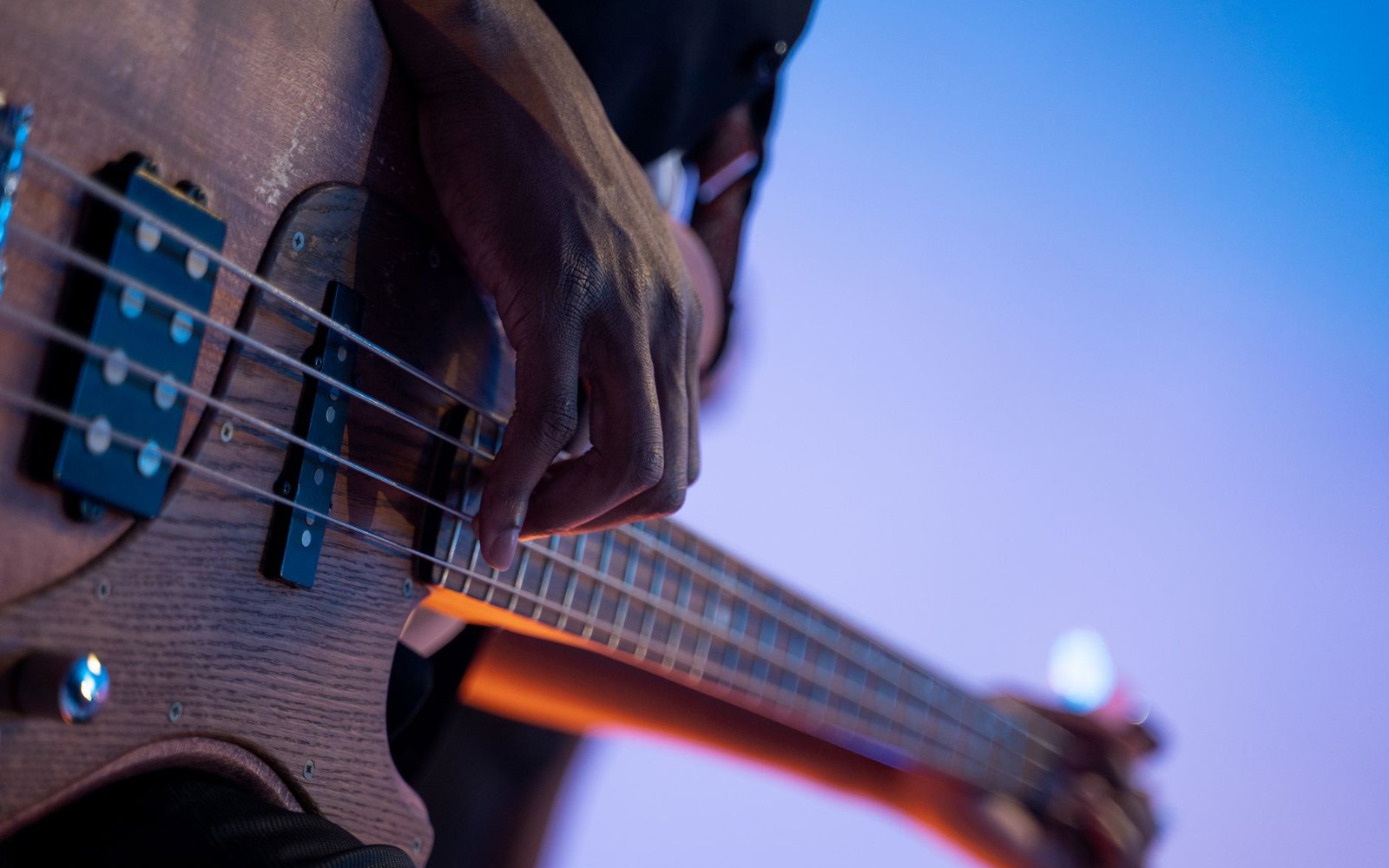
Right-hand position sets the tone before any amplifier does: over the pickup is round and thick, back at the bridge is hard and nasal.
Photo: ANTONI SHKRABA production / Pexels
Kaye has documented hundreds of sessions across her career: the Beach Boys' Pet Sounds (1966), Sonny and Cher, Joe Cocker, Simon and Garfunkel, Frank Sinatra, Ray Charles, Glen Campbell's Wichita Lineman (1968), the Monkees, Nancy Sinatra, the Righteous Brothers' You've Lost That Lovin' Feelin'. She also played the bass lines on television and film scores that saturated American broadcast schedules through the same era — Mission: Impossible, Hawaii Five-O, Mannix.
Pick, Felt, and the Physics of Studio Speed
Kaye played with a flatpick throughout, a practice she brought directly from jazz guitar and never abandoned. Where most electric bassists of the period — and particularly James Jamerson at Motown — played fingerstyle, Kaye's pick produced a harder initial transient, faster decay, and a cleaner note separation that suited the dry, close-miked aesthetic of the Los Angeles studio sound. She typically used a Fender Precision strung with flatwound strings for most of the decade, which softened the pick's attack enough to blend while retaining articulation.
The Wrecking Crew's workflow was industrially efficient. Sessions were booked in three-hour blocks at studios like United Western, Gold Star, and Capitol. Musicians read from charts, played together live in the room, and were expected to deliver usable takes inside the first few passes. There was no iterative overdubbing culture in this environment — the bass had to sit correctly in the ensemble from take one. Kaye's jazz background, with its emphasis on reading, hearing and reacting simultaneously, made her precisely suited to this rhythm.
Her approach was melodic in the jazz sense — she thought horizontally across the bar rather than vertically from the root — but her lines were ultimately in service of the track's pocket. On Wichita Lineman the bass moves with a gentle, sustained lyricism that supports Jimmy Webb's arrangement without competing with Campbell's vocal. On the higher-energy Motown-adjacent pop of the period, the pick attack gave producers a note they could hear in the control room immediately, without waiting for the room sound to settle.
The Authorship Dispute
The most contentious territory in Kaye's legacy involves sessions where her and Jamerson's documented or claimed presence overlap. Both have been credited with bass on certain recordings, and neither the original session logs nor surviving musicians have produced a fully consistent account. Researchers including those behind the Standing in the Shadows of Motown project have examined specific recordings, and the honest position remains that some tracks are still contested or genuinely unclear. What is not in dispute is that Kaye was physically present in Los Angeles recording studios on an extraordinary number of sessions across more than a decade, that her discography is documented in union AFM logs, and that the bass lines on the recordings she has confirmed are among the most heard in the American popular canon.