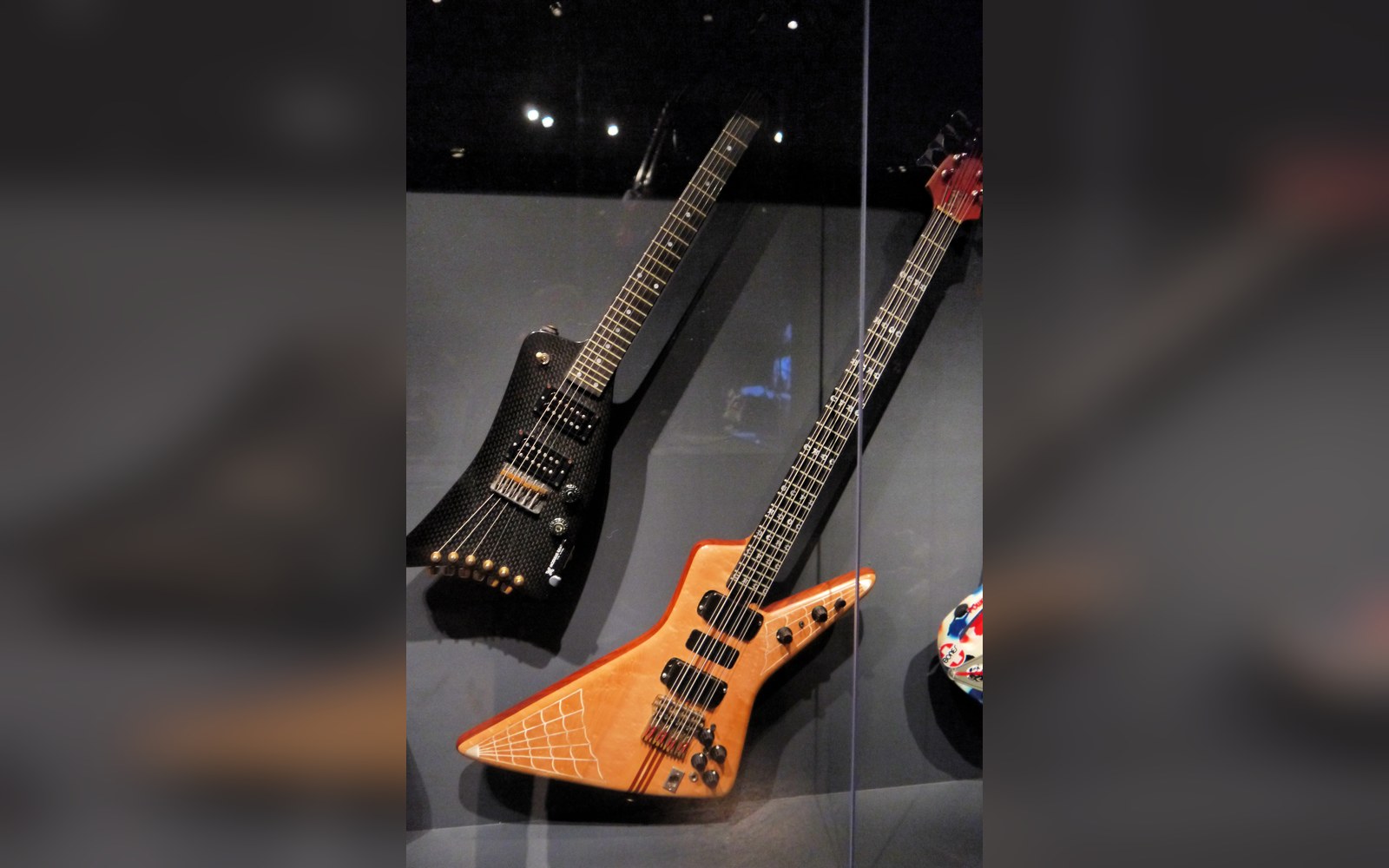
The Request
John Entwistle's problem was not volume. The Who by 1966 were loud enough to cause genuine structural anxiety at venues, and his Marshall stack took care of headroom. The problem was cut — the ability of the bass to be heard as a distinct voice inside the guitar assault Pete Townshend was generating from the other side of the stage. The flatwound strings that came standard on bass guitars of the period produced a warm, compressed thud: exactly right for the Motown sound that James Jamerson was simultaneously perfecting on flatwound strings in Detroit, and completely wrong for what Entwistle needed to do.
His documented account places him at Rotosound, the British string manufacturer then based in Hounslow, asking whether the company could wind a bass string the way a piano manufacturer wound its bass strings — with a round wire wrapped around a core rather than a flat ribbon pressed smooth. The physical difference is modest. The sonic consequence was not. A roundwound surface leaves ridges that the string's harmonics reinforce instead of suppress. The result is a brighter, more forward tone with a pronounced upper-midrange presence — the very frequencies that let a bass cut through a dense electric guitar mix rather than sit underneath it.

Right-hand position sets the tone before any amplifier does: over the pickup is round and thick, back at the bridge is hard and nasal.
Photo: ANTONI SHKRABA production / Pexels
Rotosound's production team, led by James How, translated the concept into a commercial product. The Swing Bass 66 set used stainless-steel roundwound construction over a hex core, producing a character that was brighter than anything previously sold as a bass string. Entwistle adopted the set immediately and used roundwounds for the rest of his career, a loyalty the manufacturer documented and used in its advertising for decades.
What the Strings Built
The ripple effect was architectural. Session players in London adopted roundwounds through the late 1960s. Manufacturers began to face questions from players about string construction that would previously have seemed academic. La Bella had long supplied the flatwound market; D'Addario would eventually build a roundwound business of its own. Rotosound's head start and the Entwistle association gave the company a credibility that stuck — by the early 1970s, roundwound bass strings were no longer a niche request. They were the default.
Entwistle's own instrument chain amplified what the strings were doing. He drove Hiwatt amplifiers hard and ran his signal fairly dry, which let the string's natural brightness reach the front of house rather than be shaped into submission by heavy EQ. His picking technique — fingers and occasionally plectrum, striking the string with a sharpness that complemented rather than damped the roundwound surface — extended the harmonic range further still.
Live at Leeds
The evidence lands in 1970. Live at Leeds, recorded at the University of Leeds on 14 February 1970 and released in May of that year, captures Entwistle's bass in a way that studio records of the period rarely managed — loud, unfiltered, harmonically dense. On "My Generation" the bass is not following the chord; it is arguing with the guitar. Single-note runs articulate each pitch with a transient clarity that flatwound strings structurally cannot produce. The roundwound's ridged surface generates a percussive attack that works like a second snare, and the sustain that follows holds enough harmonic content to remain audible as melody.
Live at Leeds was recorded at the venue by Damon Lyon-Shaw and mixed in a way that famously refused to bury the bass in the interest of conventional balance. That production choice and Entwistle's string choice were aligned: both were made by people who thought the low end should be heard. The album became, and remains, a primary document of what an electric bass guitar sounds like when nothing is done to make it polite.
Every bright, attack-forward rock bass sound recorded after 1966 — Chris Squire's Rickenbacker grind, Lemmy Kilmister's motorised roar, Geddy Lee's mid-heavy precision — shares a lineage that traces back to one player asking a string manufacturer for something that did not yet exist. Rotosound built it. Entwistle played it. The instrument has sounded different ever since.