
Construction First, Then Consequence
A bass string is a steel core wrapped in a winding. On a flatwound, that winding is a ribbon of metal — flat in cross-section — wound so each turn sits flush against the last, producing a smooth surface the finger barely registers as texture. On a roundwound, the winding is round wire, which leaves a helical ridge along the string's length. That ridge is where the difference begins, and it is not subtle.
The flat surface of a flatwound damps the upper partials that round wire generates. The result is a tone heavy in fundamental, thick in the low midrange and short on overtone bloom: the thud under James Jamerson's lines at Motown Studio A, the soft fundamental behind Paul McCartney's Höfner 500/1, the controlled low end that early recording engineers could manage without wrestling a console. Flatwounds were not a compromise. They were the sound.
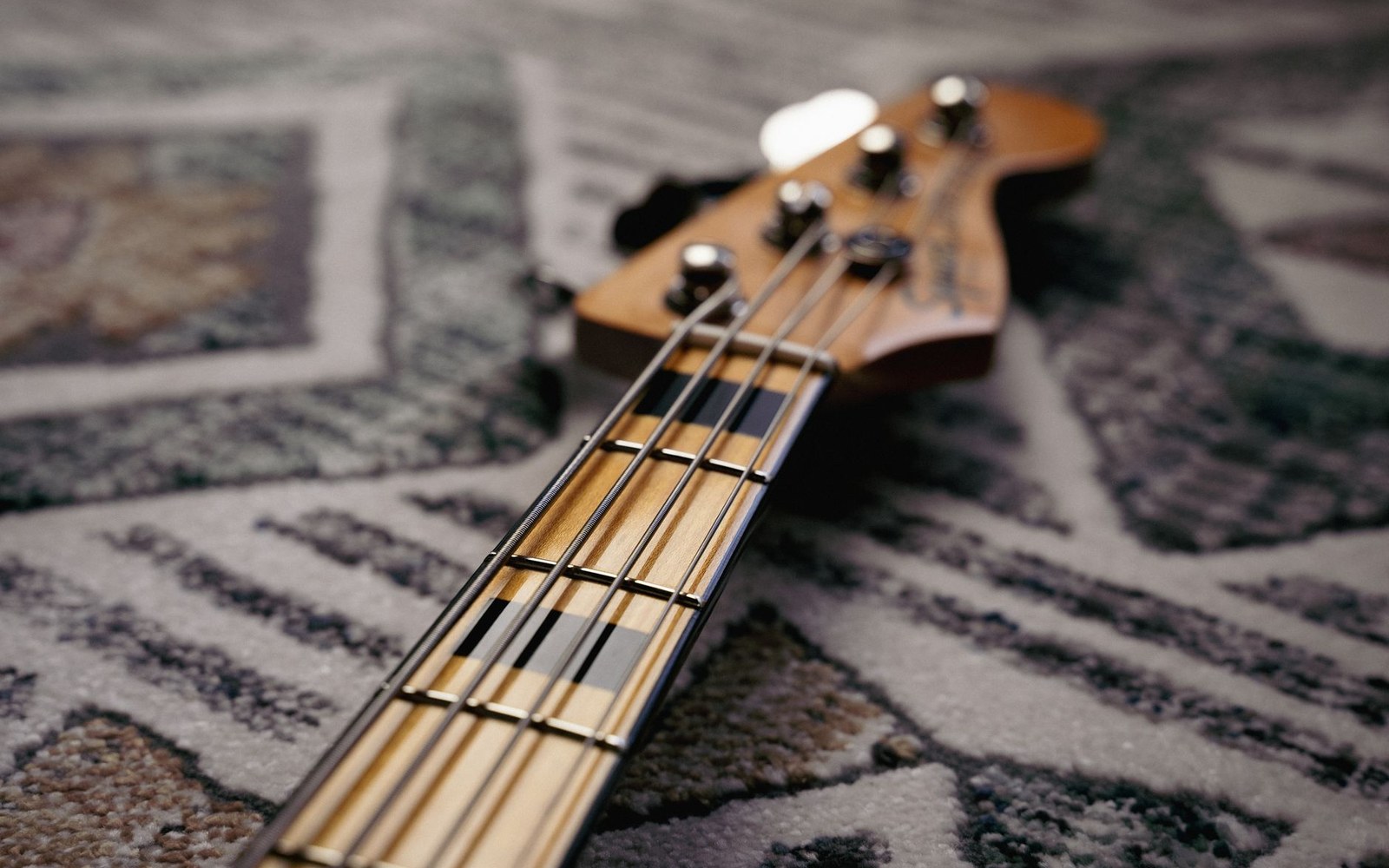
Roundwound strings are wrapped in round wire, which leaves a ridged surface: brighter, louder, and harder on frets than a flatwound.
Photo: DiePhotoPotato / Pexels
La Bella made flatwounds; so did Fender and a handful of European suppliers. The convention held through the late 1950s and into the early 1960s without serious commercial challenge, in part because the bass guitar itself was still finding its way out of the upright's shadow and nobody was asking it to cut through a mix so much as fill the bottom of one.
Rotosound and the Swing Bass 66
The interruption came from a small British string manufacturer. Rotosound, based in Sevenoaks, Kent, developed a steel roundwound string for bass in the mid-1960s — the Swing Bass 66. The construction borrowed from piano wire logic: a round steel winding over a round steel core, leaving that textured surface that gave the strings their brighter, more cutting tone.. John Entwistle of The Who was among the earliest and loudest adopters, and his recorded tone from that period explains why: the Swing Bass 66 under a pick produced upper harmonics the electric bass had never publicly owned before.
The tonal shift was not a matter of taste refinement — it was a category change. Roundwounds ring where flatwounds thud. They sustain where flatwounds decay. They produce a brightness in the 2–5 kHz range that cuts through a distorted guitar in a way flatwound-strung instruments simply cannot. As rock music grew louder and more harmonically dense through the late 1960s and 1970s, roundwound strings followed the trajectory almost inevitably, and Rotosound's role in that shift is documented in the instrument's recorded history rather than claimed in retrospect.
Why Flatwounds Survived
The striking fact is not that roundwounds became dominant — it is that flatwounds did not vanish. They receded to specific contexts, and those contexts are worth naming precisely.
Studio sessions demanding vintage R&B tone kept flatwounds on the instrument. Neo-soul recordings through the 1990s and 2000s — the sessions that produced D'Angelo's Voodoo (2000) among others — reached back deliberately for that fundamental-heavy flatwound character because the music required weight rather than articulation. Jazz players had largely remained flatwound-strung throughout, the smooth surface suiting both the right-hand technique and the tonal palette that genre expected from its low end. Short-scale instruments, the Höfner 500/1 being the obvious example, continued to reward flatwound stringing because the combination of short speaking length and flat ribbon winding produced a tone that roundwounds on the same instrument cannot replicate cleanly.
The striking fact is not that roundwounds became dominant — it is that flatwounds did not vanish.
La Bella's 760 series and D'Addario's Chromes became the standard references for players seeking that sound. Neither disappeared from catalogues; both found renewed commercial interest as producers and session players rediscovered what flatwounds do to a track that no EQ adjustment to a roundwound-strung instrument quite replicates.
The two string types now occupy distinct but stable positions in the market. Roundwounds are the default — most basses ship with them, most recordings use them — and flatwounds are a deliberate choice, which is to say they have become expressive rather than standard. The sixties did not replace one string with another so much as they gave the bass guitar two different instruments wearing the same body.