
The Physics Behind the Sound
The split-coil pickup fitted to the Precision Bass since 1957 is two coil halves staggered along the string path: one sits beneath the E and A strings, the other beneath the D and G, offset roughly half an inch toward the bridge. Each coil senses two strings, the pair cancels hum exactly as a full humbucker does, but the physical stagger changes the relationship between the coil and the string's vibrating length. That geometry — the precise distance from the bridge saddle to each coil's sensing point — shapes where the pickup's frequency response peaks. The result is a pronounced emphasis in the upper midrange around 700 Hz to 1 kHz, a band the human ear is acutely sensitive to and one that sits cleanly above the low-frequency clutter of kick drums and below the presence frequencies that guitars occupy.
That peak is not equalisation applied afterward. It is baked into the coil geometry and the output impedance of the pickup itself. Run a Precision direct into a console with no EQ, and the midrange is already there — forward, slightly nasal, immediately legible. Engineers at Motown's Studio A knew this before the terminology existed to describe it.
Against the Jazz and the StingRay
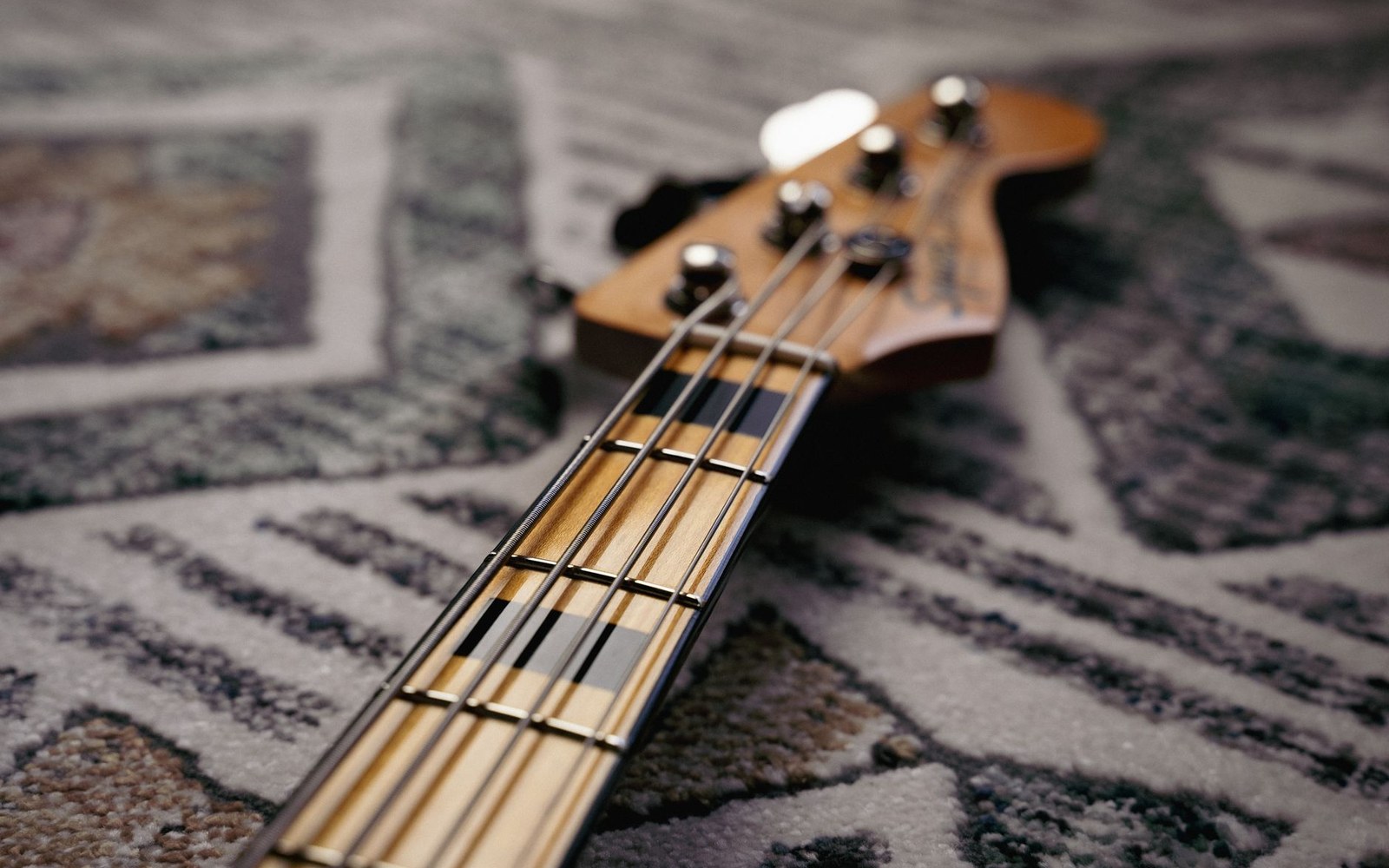
Roundwound strings are wrapped in round wire, which leaves a ridged surface: brighter, louder, and harder on frets than a flatwound.
Photo: DiePhotoPotato / Pexels
The Fender Jazz Bass uses two single-coil pickups wired in parallel when both are at full volume. Single-coil designs are physically narrower, which extends their high-frequency response, and the Jazz's characteristic sound rewards the upper partials — articulate, bright, with a scooped-middle quality that has made it the preferred tool for slap technique and fretless playing. It sits in a mix differently: where the Precision pushes the midrange forward, the Jazz opens up at the top and requires more mid-frequency support from an amplifier or desk when the track is dense.
The Music Man StingRay's large humbucking pickup sits closer to the bridge than either Fender design. Bridge placement emphasises the upper harmonics and introduces a burpy, present quality in the high-mid range — reinforced by the StingRay's onboard active preamp, which was an early active circuit to ship as a standard factory feature, arriving in 1976. That combination produces a more aggressive, punchy character than the Precision's warmer mid-forward voice. Each sits in the mix, but they occupy different corners of it.
The Precision's particular usefulness is that its midrange peak arrives without help. No active preamp, no sweepable EQ, no compensating boost at the desk — just the staggered coil geometry that Leo Fender's revised 1957 design established and that every subsequent copy has tried to replicate.