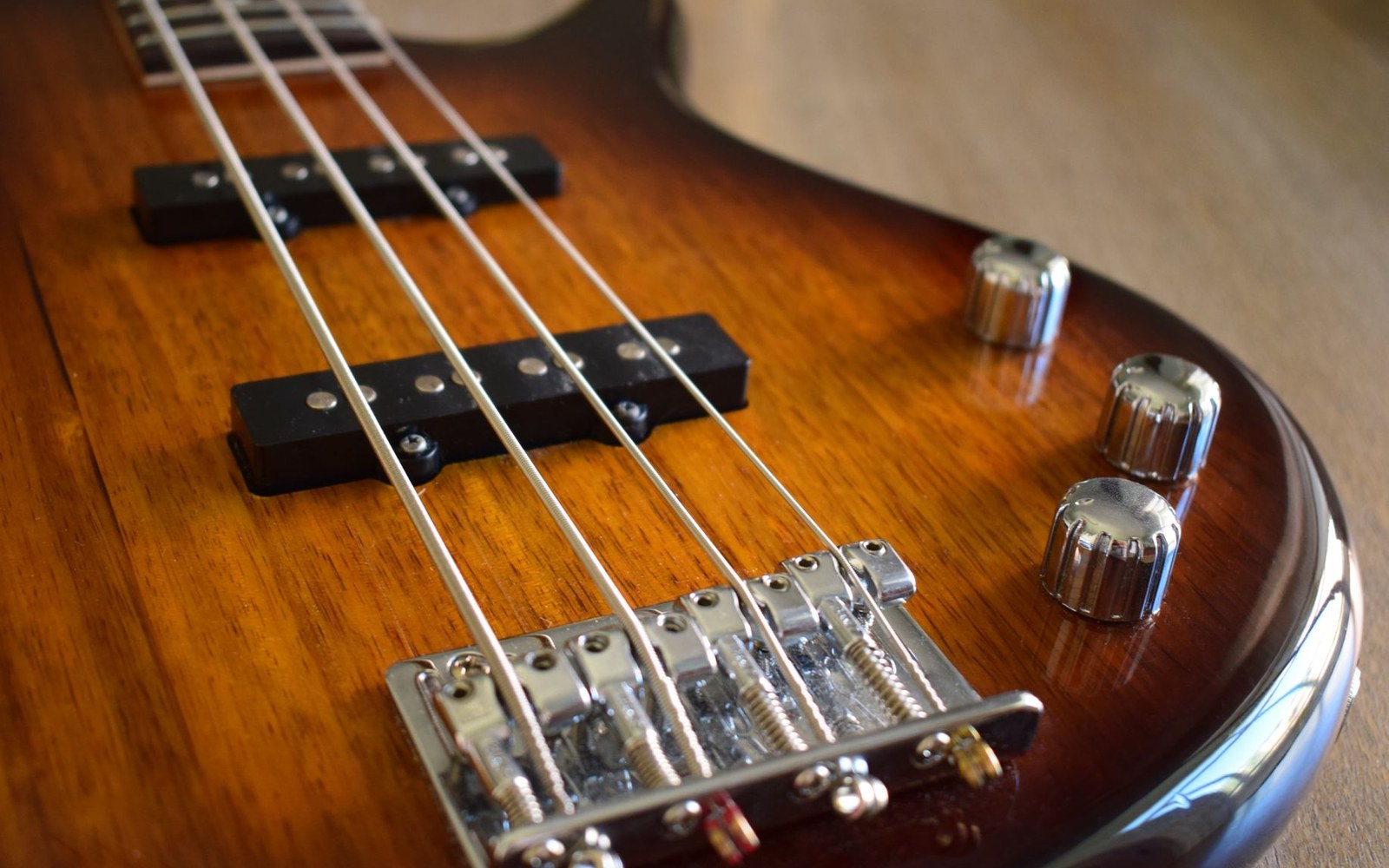
Miami Heat, Columbia Sessions, 1976
Weather Report had been working the space between jazz composition and electric texture since 1970, but Heavy Weather — recorded in 1976, released on Columbia Records in 1977 — was different. It was a pop-length album with pop-adjacent sales: it became one of the band's best-selling albums, reaching the Billboard top 40 and earning gold and later platinum certification. It put Jaco Pastorius, already known within the jazz world through his self-titled debut, in front of the kind of mainstream audience that bought albums based on radio singles. 'Birdland' was the single. 'Teen Town' was the demonstration.
Pastorius had already defretted his 1962 Fender Jazz Bass — the instrument he called the Bass of Doom — filling the slots with wood filler and finishing it with marine epoxy to preserve the fretboard under the bite of roundwound strings. The construction was unconventional and unrepeatable in its exact form, but its consequence was total. Without frets, the bass could voice pitches the way a cello does: continuously, expressively, with the ability to slide between notes rather than jump between fixed points. On Heavy Weather, that capability was not an embellishment; it was the architecture.
What 'Teen Town' Actually Does
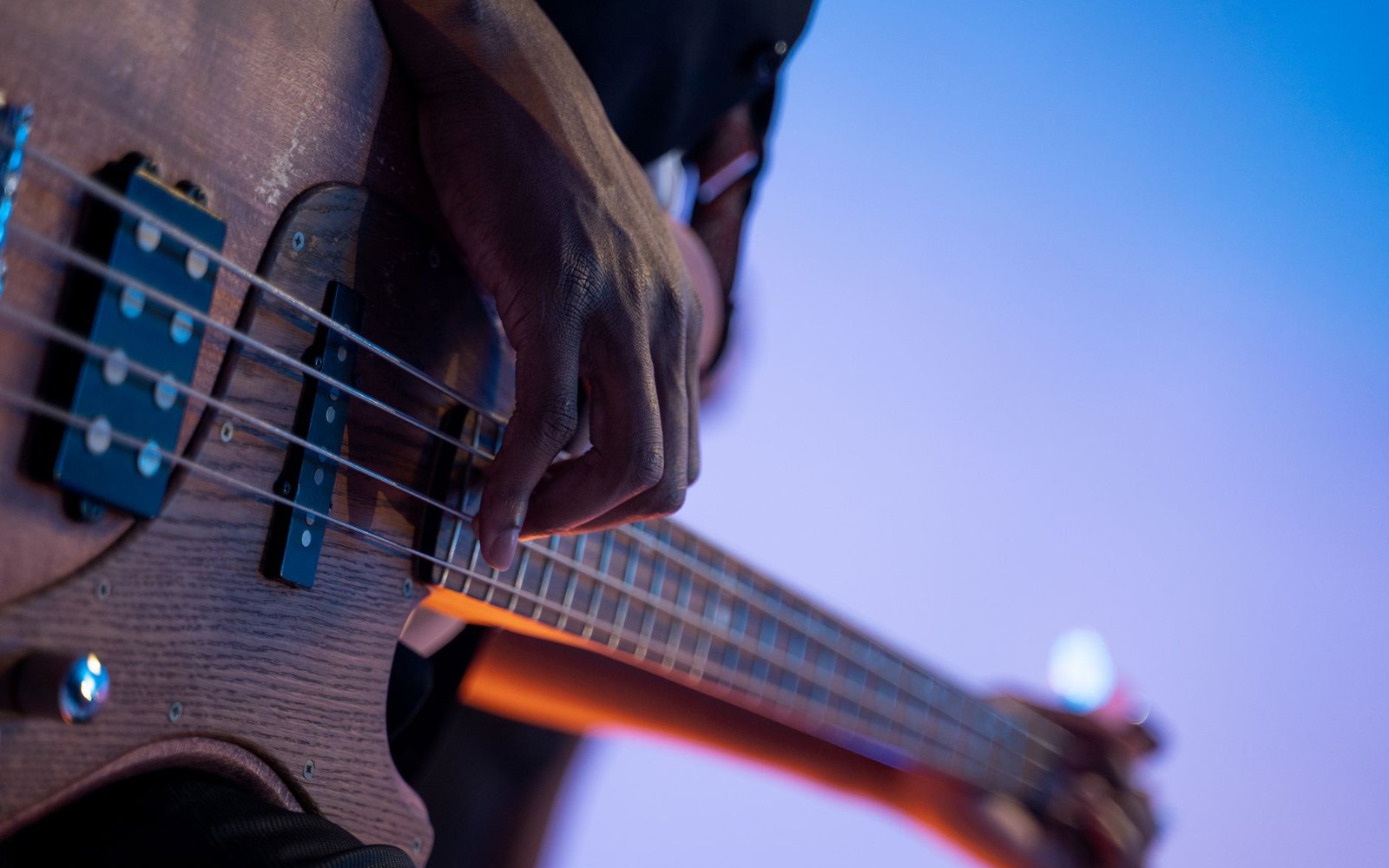
Right-hand position sets the tone before any amplifier does: over the pickup is round and thick, back at the bridge is hard and nasal.
Photo: ANTONI SHKRABA production / Pexels
'Teen Town' runs at a tempo few bassists would choose voluntarily for a bass-led line, and the bass is playing the melody. The opening statement is not a riff supporting a horn or keyboard — it is the primary melodic voice, moving in intervals that only work cleanly when intonation is controlled entirely by the player's hand position. On a fretted instrument, every note lands where the metal says it lands. On Pastorius's instrument, every note lands where he puts it. The difference is audible on every phrase, particularly in the upper register where natural harmonics ring briefly against the fretless sustain.
Those harmonics were not decorative. Pastorius used artificial and natural harmonics throughout Heavy Weather as tonal events in their own right, not as texture. On 'Teen Town' specifically, roundwound strings on an epoxy-coated fretboard produced a brightness that flatwound-strung fretless basses — the earlier idiom, rooted in upright bass simulation — never approached. The result was a melodic instrument with the cutting frequency content of a lead guitar and the rhythmic function of a bass.
The recorded signal reached tape through a direct injection path, meaning the tonal character of the Bass of Doom came to the console without an intervening speaker cabinet reshaping it. The clean DI sound — the instrument's own voice, placed directly in the mix — was part of why the harmonics read so distinctly. A miked cabinet would have softened exactly the transients that made the technique legible to a listener.
The Effect on Practice
Within the year following Heavy Weather's release, documented accounts from lutherie shops and instrument retailers recorded a rise in players requesting fret removal or purchasing defretted instruments. The cause was simple: 'Teen Town' sounded like something a bass guitar could do, and it was playing something no fretted instrument could replicate in the same register at the same speed with the same pitch expression. That combination made the technical means — a defretted neck, an epoxy coating, roundwound strings — worth learning and copying.
Pino Palladino, working in a very different harmonic idiom in early-1980s British pop, arrived at the fretless by a separate route, but the audience's readiness to accept fretless bass as a principal voice — not a jazz curiosity — had been set by Heavy Weather. The recording that Palladino made with Paul Young in 1983 found listeners already primed. Pastorius had done that priming six years earlier, one tempo at a time.