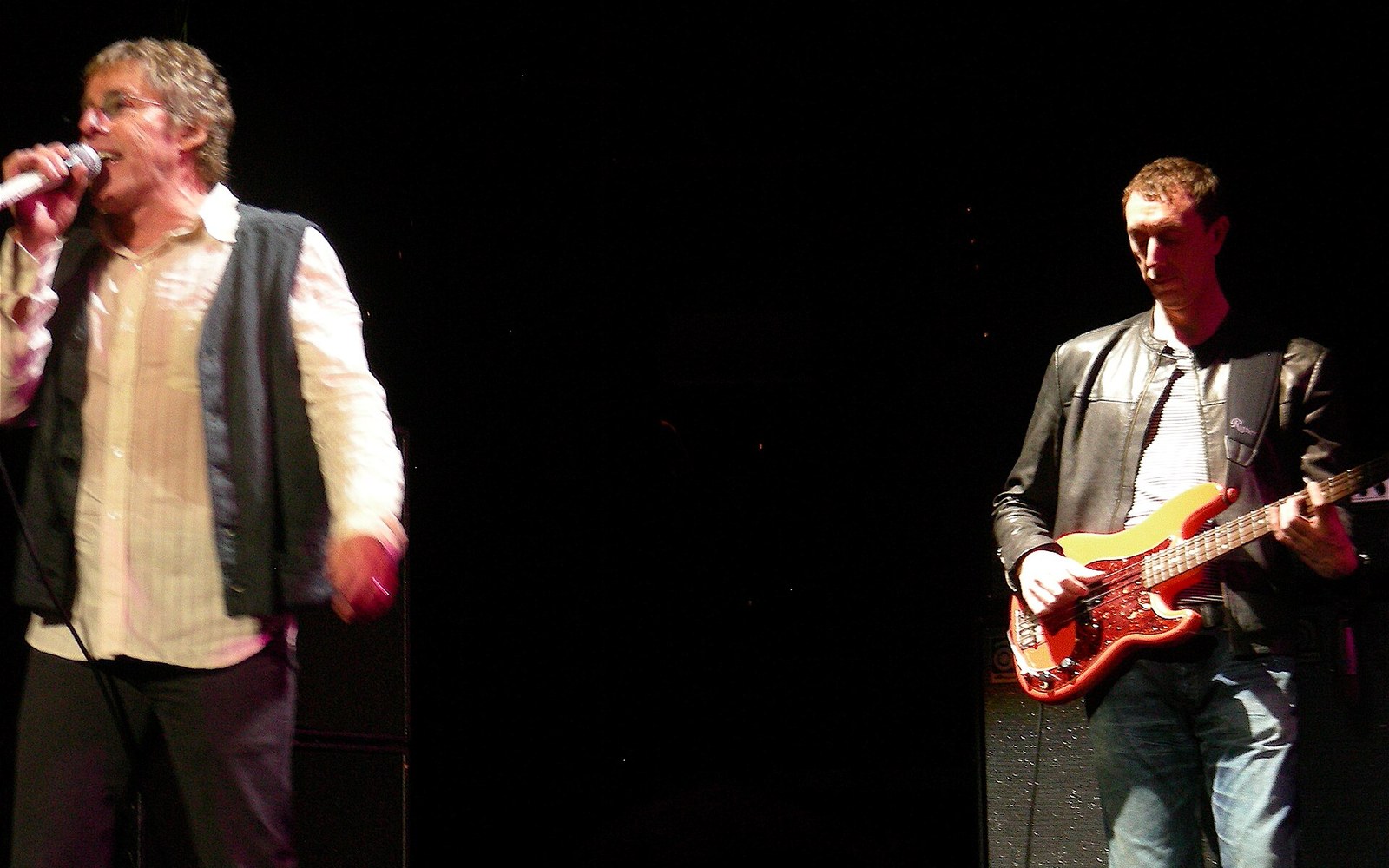
A Sound Built from Touch, Not from the Instrument
Pino Palladino is the rare bassist whose identity has almost nothing to do with the bass he is holding. In 1983, playing fretless on Paul Young's "Wherever I Lay My Hat," he produced a vocal, singing tone that climbed into the mix the way a sax line does — the note bending before it arrived, the sustain doing the melodic work. It made him one of the most-copied fretless voices on British session records almost overnight. Then he put the fretless down, picked up other instruments, walked into entirely different rooms, and sounded recognizably like himself every time.
That Paul Young session was a cover of Marvin Gaye's 1969 original, and Palladino's fretless work — warm, wide-vibrato, recorded through the kind of clean, direct signal that let every micro-inflection register — redefined what fretless bass could do in a pop arrangement. The technique is closely related to what Jaco Pastorius had done on fretless with Weather Report: use the absence of frets not to play jazz chords but to make the bass sing actual melody. Palladino took that idea into Top 40 and it worked perfectly.
Three Records, Three Instruments, One Sensibility
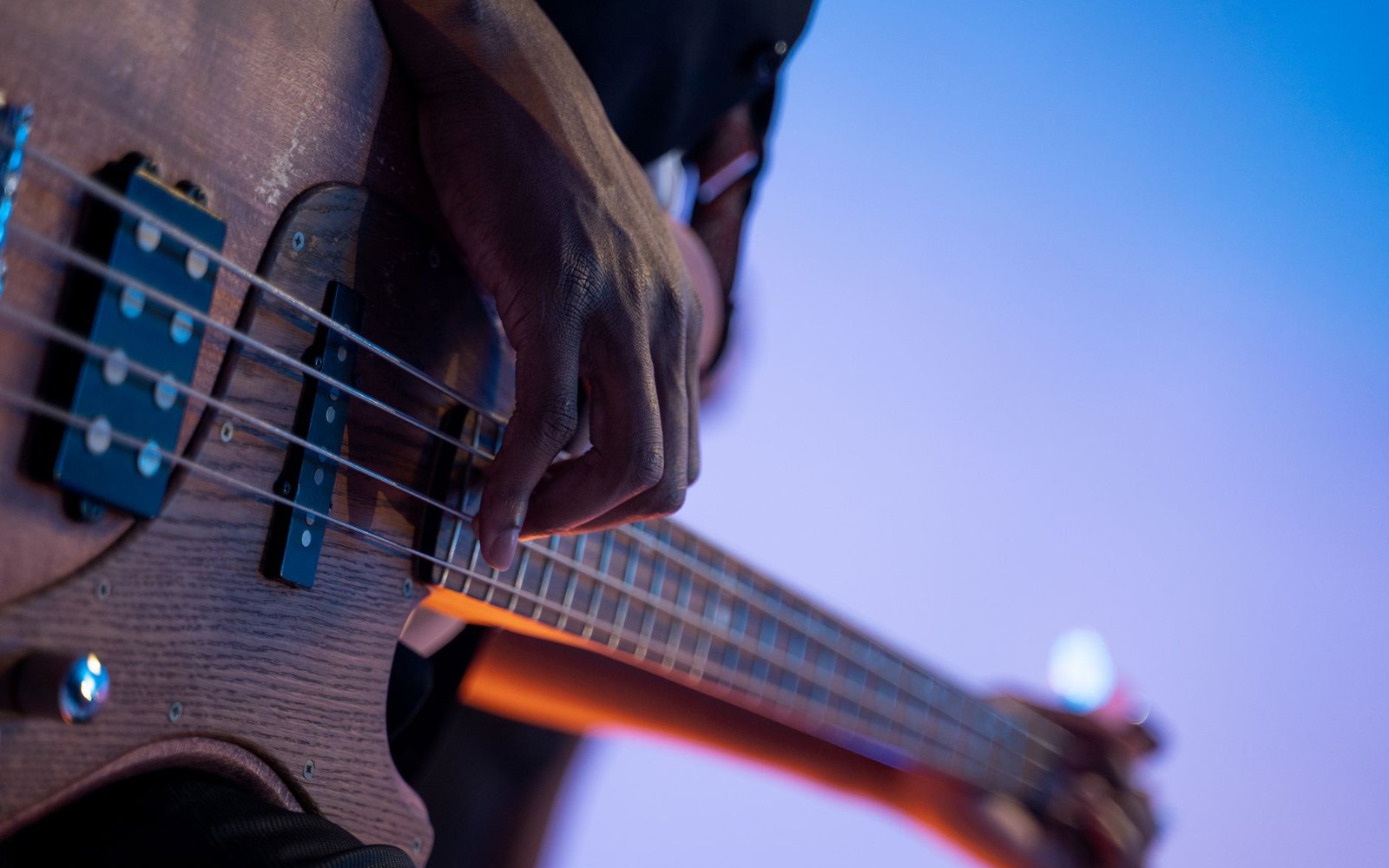
Right-hand position sets the tone before any amplifier does: over the pickup is round and thick, back at the bridge is hard and nasal.
Photo: ANTONI SHKRABA production / Pexels
By the time D'Angelo called him for Voodoo in 2000, Palladino had already spent years moving between electric, fretless and upright. On Voodoo, he mostly played a regular fretted electric — and the groove sat deep, deliberately behind the beat, locked to Questlove's drums in a way that made the whole record feel like it was slightly sinking into warm asphalt. The fretless virtuoso of the Paul Young records had become a pocket player, almost self-effacing, and the album was the better for it. The sound on Voodoo is direct injection into the desk, minimal processing, the bass as a rhythm instrument that also carries fundamental harmony — nothing decorative.
Black Messiah, released in 2014 after a fourteen-year wait, asked different things again. The sonic palette was denser, angrier in places, and Palladino moved between instruments within the project — upright in some passages, fretted electric in others — tracking to material that ranged from gospel-weighted balladry to something close to hard funk. What stayed constant across both D'Angelo albums was a quality that is difficult to name without resorting to cliché: the notes have gravity. They do not float over the rhythm section; they are part of its foundation in a structural sense.
The Who sessions tell a parallel story. After John Entwistle's death in 2002, Palladino took one of the most technically demanding and historically loaded chairs in rock without attempting to replicate what Entwistle had done — the trebly, Rotosound-bright, aggressive lead bass that had defined the band's sound from the mid-1960s. He played the parts with his own touch, his own tone, and the band continued. It was a pragmatic and honest solution to an impossible situation.
What Forty Years of Switching Reveals
Instrument identity in bass guitar tends to be discussed in terms of the tool: the Precision man, the Jazz Bass player, the fretless specialist. Palladino's career is a forty-year argument against that framing. The thing that persists across the fretless pop records, the neo-soul sessions, the arena rock touring and the upright passages isn't a pickup configuration or a string choice — it's a feel that originates in the hands and the ear before it reaches the instrument.
His touch is relatively light for the range of music he covers. The vibrato on fretless is wide enough to sing but never sentimental. On electric, the attack is defined without being percussive; the note blooms rather than strikes. These are qualities that travel. They work against flatwound strings on a fretless in a London studio in 1983, and they work on a fretted P-bass routed through a DI box in a New York studio nearly two decades later.
Most players find their instrument and it finds them. Palladino found his approach instead, and the approach has proven applicable everywhere. That is a much rarer thing than being good at the bass.