Three architectures, one problem: bass frequencies at zero cubic feet
When a bass amplifier produces its characteristic sound, at least five things are happening simultaneously: the preamp is clipping in a particular way, the power section is compressing, the speaker is moving air inefficiently at the low end, the cabinet is resonating, and the room is adding reflections. Every approach to amp simulation is really a theory about which of those five things actually matters — and which can be approximated or ignored.
The Line 6 Helix, the Kemper Profiler and the Neural DSP Quad Cortex each answer that question differently. None of them answers it identically to a real Ampeg SVT pushing an 8×10. But that is not quite the right comparison anymore.
Modelling, profiling, and what happens to the low end
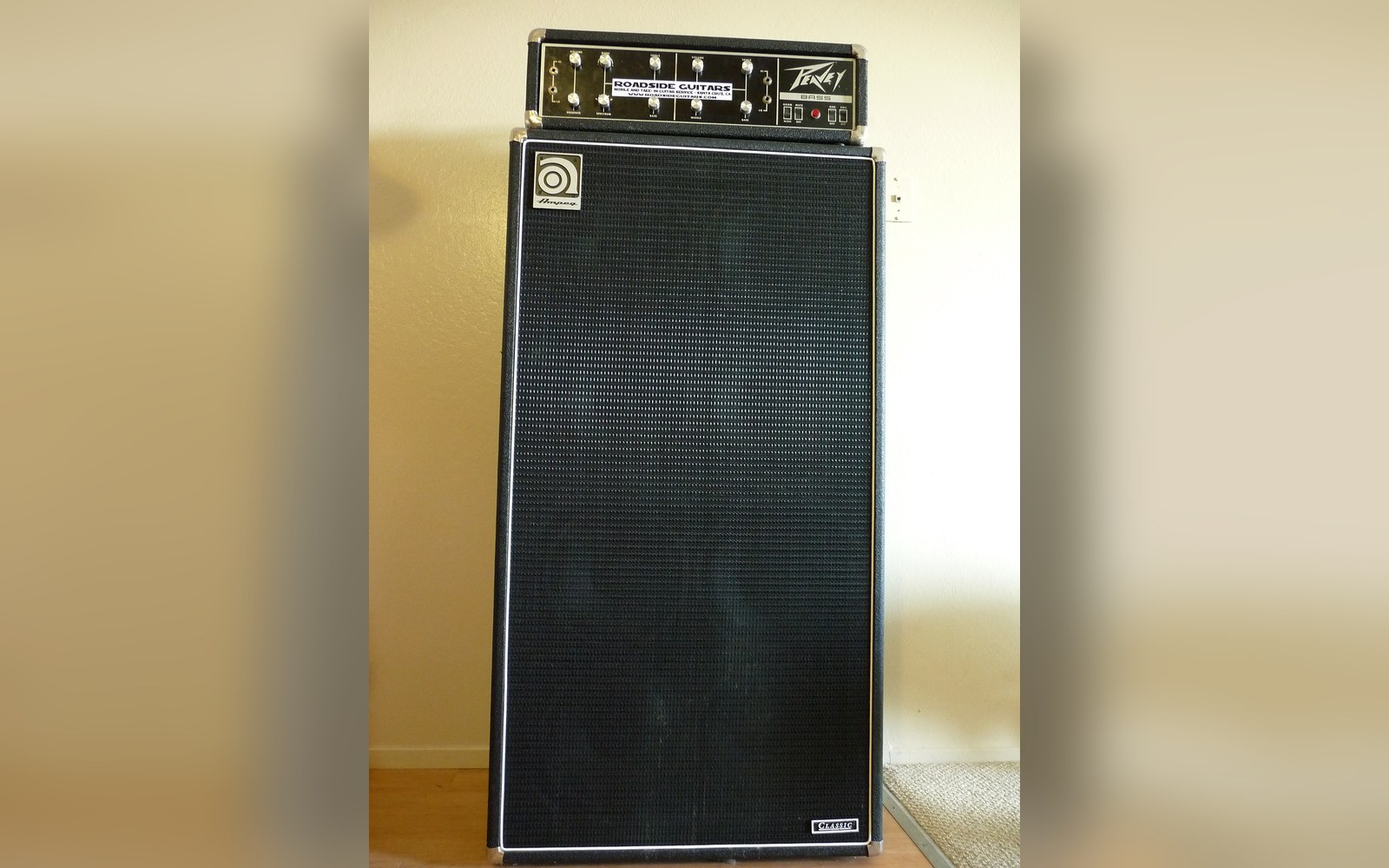
Three hundred valve watts across eight ten-inch speakers. The SVT exists because bass rigs could not keep up with the PA systems of 1969.
Photo: Peavey head & Ampeg Classic cabinet · Wikimedia Commons
The Helix uses a component-level modelling approach — Line 6's term for it is HX modelling — in which circuit elements are described mathematically and the signal is processed according to those equations in real time. Every knob position on a simulated Ampeg B-15 corresponds to a recalculation of how that circuit would respond. The advantage for bass is control: parameters can be adjusted beyond the original amplifier's physical limits, and the player can chain a B-15 preamp model with a clean power section, or blend two signal paths at the stereo outputs. The Line 6 Helix was first shown in 2015, and the architecture has been updated through firmware rather than hardware replacement, which matters for the investment calculation. The low end response in HX models is generally described by engineers as accurate up to the cabinet model's roll-off point; problems arise when bass-frequency components interact in ways the modelled circuit's equations did not anticipate, producing a flatness in the sub-100Hz region that experienced ears catch in a solo recording situation.
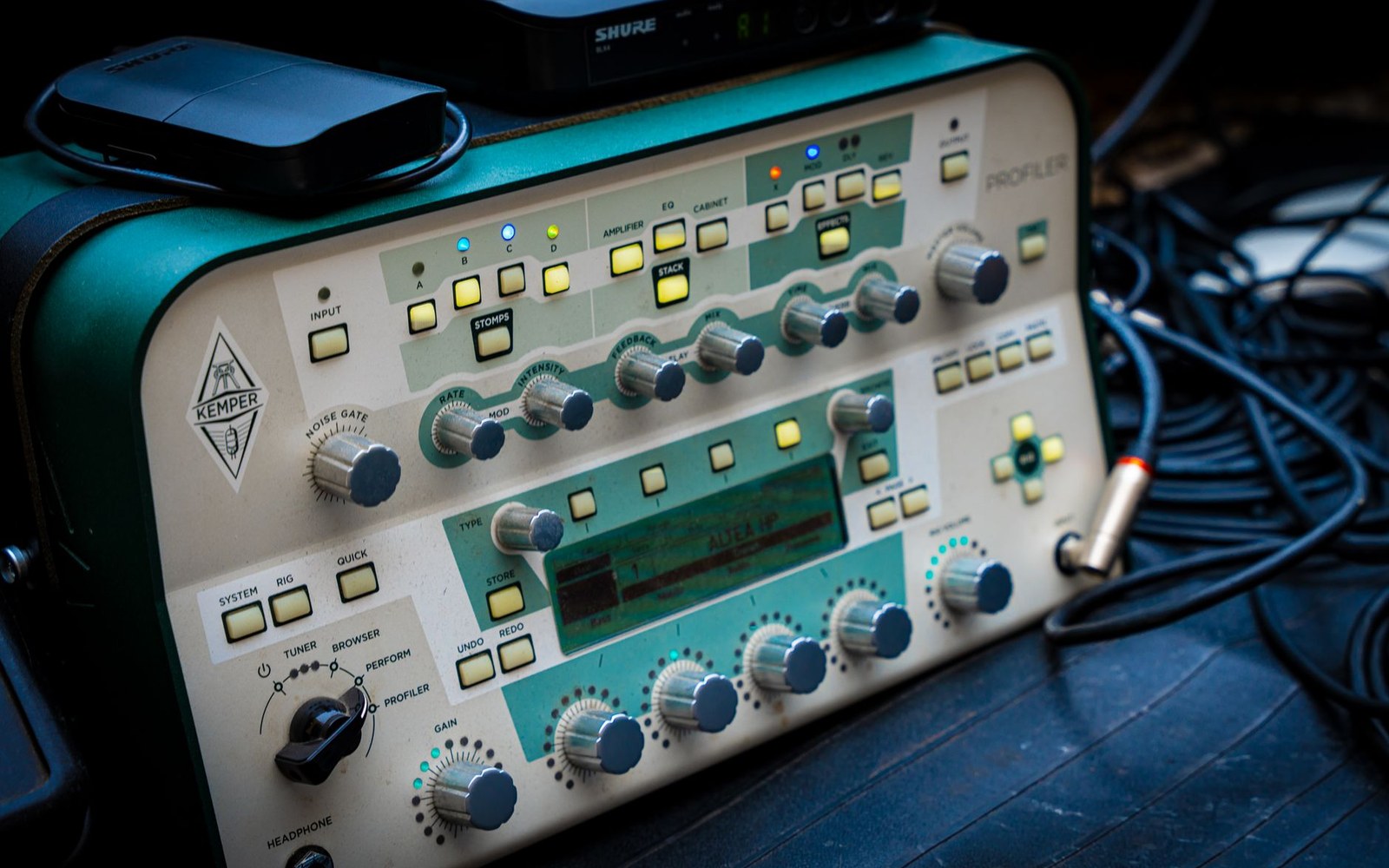
The Kemper works differently at a fundamental level. Rather than describing a circuit, it captures the measured response of a physical amplifier by running shaped test tones through it and comparing input to output, deriving a transfer function that is then stored as a profile. What you are running through the Kemper is, in a meaningful sense, a photograph of a specific amplifier in a specific state of its life, at a specific volume and bias setting. For bass, this has a practical consequence: a Kemper profile of an SVT pushed to 7 will sound like that SVT at 7, not at 3. But the profile does not generalise — turning the gain down on the Kemper does not give you the SVT at 4; it gives you a mathematically reduced version of the profile at 7. The overall picture is particularly accurate in the midrange frequencies where most of the amplifier's character lives, because that is where the transfer function captures the most distinctive behaviour.
Neural DSP's Quad Cortex takes a third path, using machine-learning techniques — specifically a convolutional neural network — to derive models that combine elements of both approaches. The neural network is trained on the measured behaviour of physical amplifiers, and the resulting model can generalise across parameter changes in a way a Kemper profile cannot. The architecture means the Cortex can, in principle, capture not just the static transfer function but the dynamic responses: how the amplifier compresses as transients hit it, how the power section sags under a picked low E. For bass players, that sag behaviour is significant; it is part of what separates a live amplifier from a direct recording. Independent measurements and forum-documented tests suggest the Quad Cortex's low-end reproduction is competitive with the Helix on flat-response monitors, and closer to the Kemper in feel when driven hard.
All three devices share a common limitation for bass: the chain from instrument to console still requires a decision about cabinet simulation. Running without it — straight into a desk — exposes the model's low-frequency accuracy without any cabinet roll-off to hide the seams. Running a full impulse-response cabinet load corrects this for the front-of-house mix but removes the monitoring experience of an amplifier in the room, which is where most bass players learn what they are actually playing.
The amp is still there in each of these boxes. What it cannot do is move air at your feet — and for many recording contexts, that stopped being a requirement sometime around the point when going directly into the desk became standard practice rather than a compromise.