The Instrument, the Loss, the Return
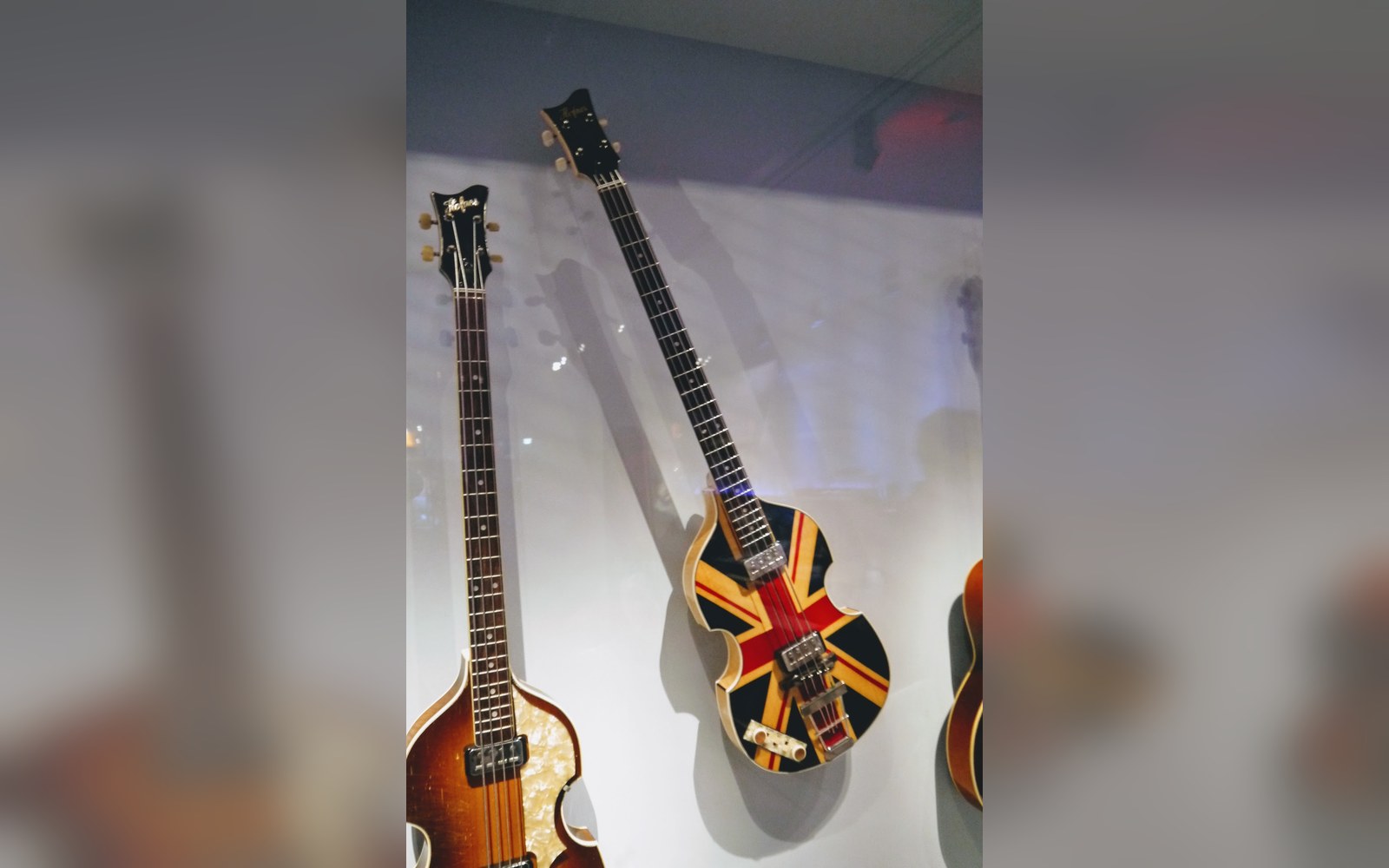
Paul McCartney's original 1961 Höfner 500/1 — a symmetrical hollow violin-body instrument built in Bubenreuth, Germany — was present at the sessions that defined the early Beatles sound. Its short scale, roughly 30 inches, and its flatwound strings produced the warm, thuddy low end threaded through recordings at Abbey Road Studios from 1963 through the mid-1960s. McCartney favoured the Höfner partly because its symmetrical body looked right played left-handed; practically, it was also light enough for marathon live sets.
The bass disappeared after a rehearsal in 1972. The circumstances were never fully resolved — the instrument simply was not there afterward, and McCartney said publicly that he had no idea where it had gone. For five decades it remained one of the more conspicuous missing objects in recorded music history.

Right-hand position sets the tone before any amplifier does: over the pickup is round and thick, back at the bridge is hard and nasal.
Photo: ANTONI SHKRABA production / Pexels
In 2024 the instrument resurfaced and was returned to McCartney. Authentication centred on physical evidence: the specific wear patterns, the original tuning machines, the pickups and their placement, and documented photographs from the early 1960s sessions cross-referenced against the recovered instrument. Höfner's own records and the surviving paper trail from the period supported the identification.
The sonic reason the recovery matters goes beyond sentiment. This particular bass — not the later basses McCartney turned to in the studio — carries the direct physical link to the records that introduced the electric bass to millions of listeners who had never consciously heard one. Its short-scale construction and the interaction of its hollow body with flatwound strings shaped a low-end signature that engineers and producers have chased in studios ever since. A replacement can approximate it. The original is the source.