The Physics Before the Players
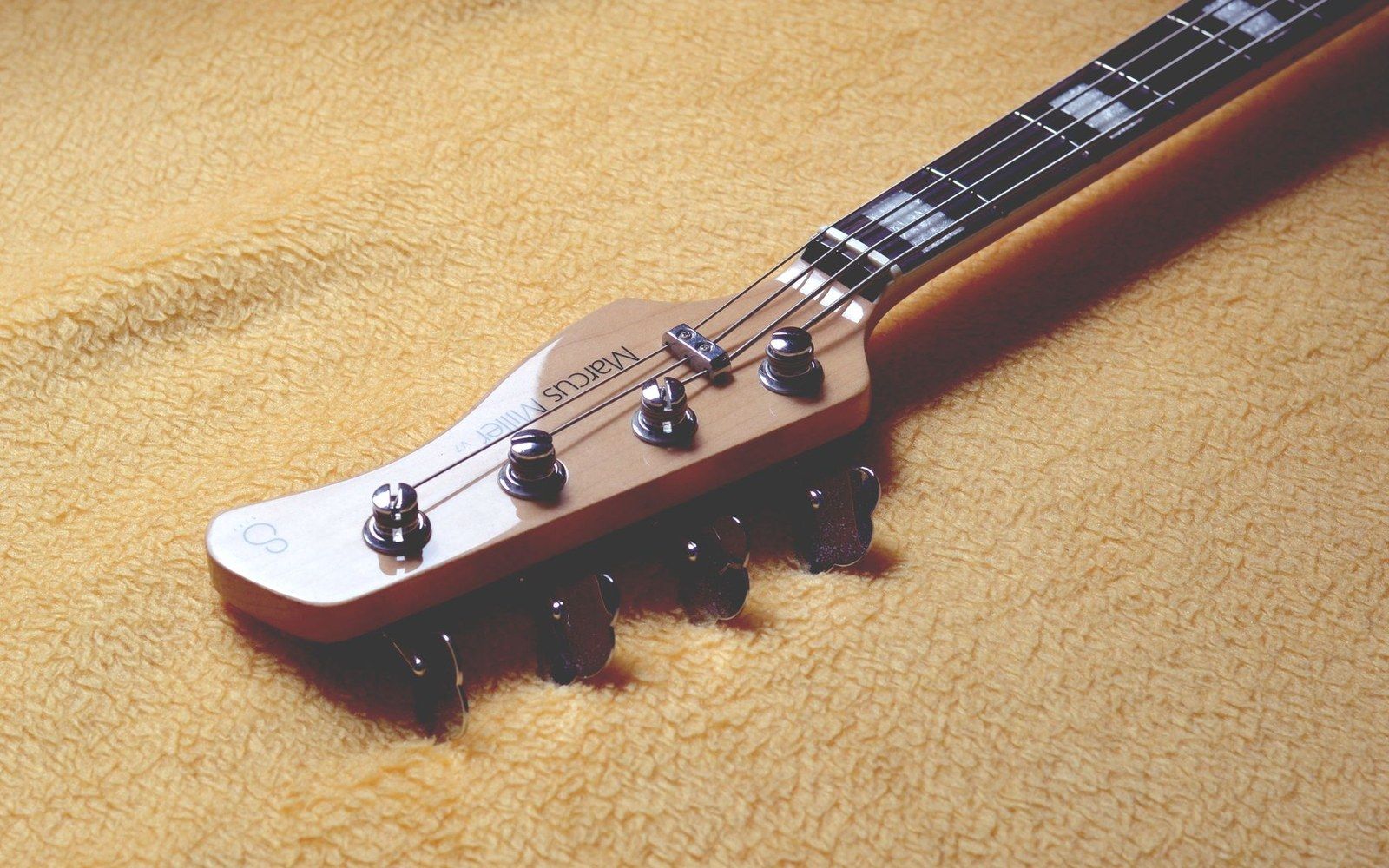
The low B string on a five-string bass sits below the E — tuned to B0, a perfect fourth below the open E. Getting that pitch to speak clearly requires either a heavier gauge string, a longer scale length, or both. At standard 34-inch scale, a .130–.135 gauge string is typical, and even then the fundamental can feel indistinct, the string slack enough to buzz and choke under a firm attack. Longer scale relieves the problem: a 35-inch scale, which became common on five-string instruments through the 1990s, raises string tension without changing pitch, tightening the feel and improving low-end definition.
Fender introduced the Bass V in 1965, but that instrument added a high C rather than a low B, and sold poorly enough that it was gone by 1970. The first commercially built instrument to popularize the low-B configuration was the Alembic Series I five-string, though the format genuinely entered the mainstream when Music Man released the StingRay 5 in 1987. That instrument's active preamp, tight neck profile and standard 34-inch scale — paired with a well-tensioned .130 string — gave the low B enough authority to pass in a live mix.
The Case For and the Case Against
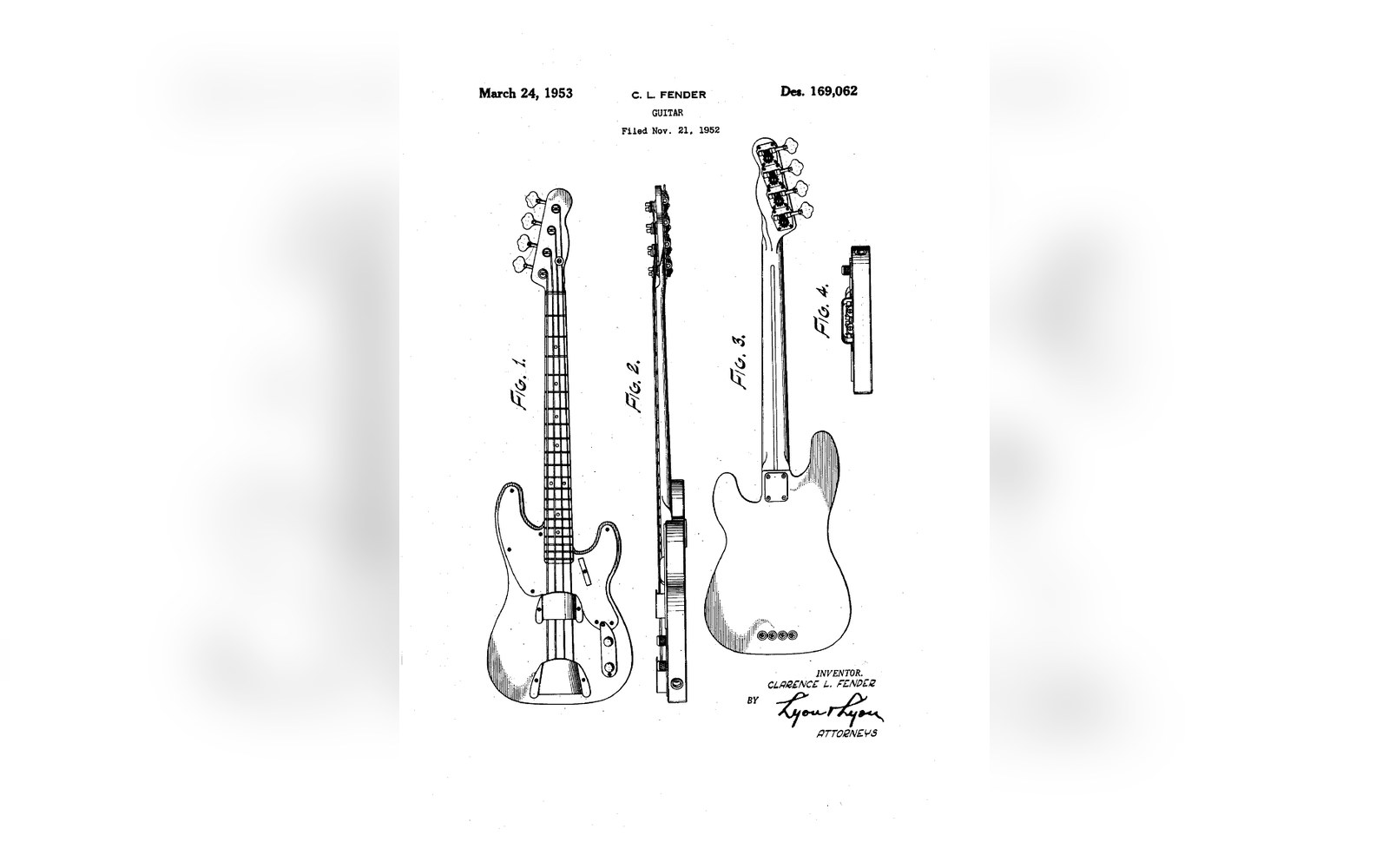
Leo Fender's design patent, filed in 1952. What it draws is the first instrument: square edges, one pickup, a headstock lifted off the Telecaster.
Photo: Fender Precision Bass '51 patent sketch (D169062) · Wikimedia Commons
Players who embraced the five-string pointed to harmonic range without a position shift: root notes on the low B let a player stay in first or second position while still reaching B, C, C# and D below the standard open E. Studio session work, gospel, R&B and modern country all leaned on this. Nathan East built a career in part on five-string fluency; Pino Palladino eventually moved to a five-string for certain sessions in the 2000s.
The objections were real. Neck width increased to accommodate the extra string — typically from around 1.5 inches at the nut to 1.75 or more — and nut width became a dividing line between players who could adapt and those who found the geometry genuinely uncomfortable. Dingwall's fanned-fret approach addressed the tension problem directly: by giving the B string a speaking length of 37 inches while keeping the G string at a more standard 34, each string arrives at its intended pitch under near-optimal tension. The design is audibly effective and physically contentious in equal measure.
String manufacturers including D'Addario responded by developing tapered-core and hex-core B strings engineered specifically for the problem. The physics improved. The argument never quite ended. Some players find the low B transformative; others never stop treating it as a compromise. Both positions have genuine evidence behind them.